Laminates for Seaworthy Packing in Mumbai
Europack - Mumbai, Maharashtra, India
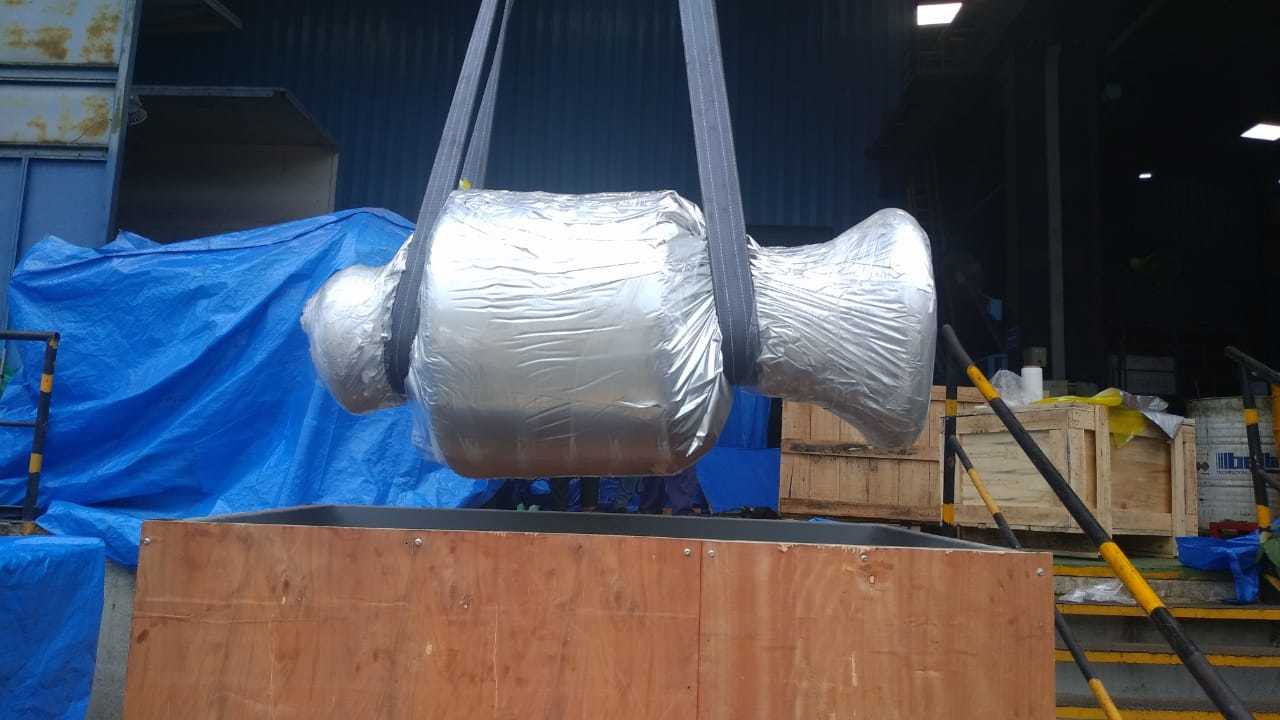
Seaworthy packing laminates represent sophisticated multi-layer barrier materials engineered specifically to protect industrial cargo from the harsh environmental conditions encountered during ocean freight transportation. These specialized films combine multiple functional layers—each addressing specific protection requirements—into composite structures that provide moisture barriers preventing condensation damage, corrosion inhibitors protecting metal surfaces, physical barriers against dust and contamination, and mechanical strength withstanding handling stress without tearing or puncturing. Europack supplies comprehensive ranges of seaworthy laminates to Mumbai's export manufacturing sector, serving machinery builders, automotive component suppliers, electronics manufacturers, and project cargo packers requiring reliable protection for equipment and materials spending weeks or months in sea containers traversing tropical and maritime climates.
The fundamental challenge in sea freight packaging stems from dramatic temperature and humidity fluctuations cargo experiences. Containers loaded in Mumbai's humid monsoon climate at 30-35°C enter air-conditioned holds during sea voyage, then discharge at European ports in winter where ambient temperatures may be below freezing. These temperature swings create condensation as moisture in warm air contacts cold metal surfaces, with water droplets forming on equipment, packaging, and container walls. Without proper barrier protection, this condensation causes corrosion on machined steel components, promotes mold growth on organic materials, creates electrical leakage paths on circuit boards, and generally degrades product condition. Seaworthy laminates create complete vapor barriers preventing atmospheric moisture from contacting protected goods regardless of external humidity levels or temperature variations.
Premium seaworthy laminates employ five or more distinct functional layers, each contributing specific protective properties:
| Layer Type | Material | Function | Typical Thickness |
|---|---|---|---|
| Outer Protection | Polyester film | Abrasion resistance, UV protection | 25-50 microns |
| Barrier Layer | Aluminum foil | Complete moisture barrier, vapor barrier | 12-25 microns |
| VCI Layer | VCI-impregnated film | Corrosion inhibition for metals | 50-100 microns |
| Structural Layer | LDPE/HDPE film | Tear resistance, puncture resistance | 100-200 microns |
| Inner Contact | PE or anti-static film | Product compatibility, ESD protection | 30-75 microns |
Volatile Corrosion Inhibitor (VCI) technology transforms seaworthy laminates from simple physical barriers into active corrosion prevention systems. VCI compounds impregnated into laminate layers vaporize at room temperature, with molecules migrating throughout enclosed packaging spaces to settle on all exposed metal surfaces as invisible monomolecular protective layers. This vapor-phase protection reaches complex geometries, internal passages, threaded holes, and hidden surfaces that physical coatings or greases cannot access, providing comprehensive corrosion protection for machinery assemblies, precision components, and fabricated metal products.
VCI effectiveness depends on achieving sufficient vapor concentration within sealed packaging. Europack's seaworthy laminates incorporate VCI loadings calibrated for different metal types and protection durations. Ferrous metal protection typically uses amino-based VCI formulations, while copper and brass require benzotriazole-based inhibitors preventing tarnishing and oxidation. Mixed metal assemblies need multi-metal VCI formulations protecting all materials simultaneously without causing galvanic reactions between dissimilar metals. For extreme-duration sea voyages or long-term storage, supplementary VCI emitter devices placed inside laminated packages boost vapor concentration extending protection to 18-24 months.
Proper laminate application critically affects protection effectiveness. For palletized loads, laminates create complete enclosures starting with base coverage—laying material under pallets preventing ground moisture ingress. Equipment or goods are placed on the prepared pallet, then laminate sheets drape over the top and sides, with generous overlaps at all seams. Heat sealing using handheld sealers or sealing equipment creates airtight bonds at overlaps, forming continuous barriers without gaps. Top coverage receives additional mechanical securement using adhesive tape or banding preventing wind displacement during outdoor storage or transport. The completed package creates a sealed environment where VCI vapors accumulate and external moisture cannot penetrate.
Large machinery requires custom-fabricated laminate bags or shrouds precisely sized to equipment dimensions. Europack's fabrication service creates bags from laminate rolls using industrial heat sealers, with dimensions calculated to accommodate equipment with sufficient clearance for easy installation while minimizing excess material. Bags may include features such as zipper closures for easy access, ventilation valves allowing air evacuation during vacuum packing, or integrated desiccant pockets containing silica gel or molecular sieve desiccants providing supplementary moisture control. For extremely large equipment exceeding practical bag sizes, panel-based construction uses multiple laminate sheets joined on-site around equipment using portable sealing equipment.
Seaworthy laminate performance is quantified through multiple standardized tests ensuring materials meet protection requirements:
| Property | Test Method | Typical Value | Significance |
|---|---|---|---|
| Water Vapor Transmission | ASTM E96 | <0.1 g/m²/day | Moisture barrier effectiveness |
| Tensile Strength | ASTM D882 | >40 MPa | Resistance to tearing during handling |
| Puncture Resistance | ASTM D1709 | >500g | Prevents damage from sharp objects |
| VCI Protection Duration | MIL-PRF-22019 | 12-24 months | Time-based corrosion prevention |
| Seal Strength | ASTM F88 | >30 N/15mm | Maintains seal integrity |
Automotive component manufacturers export pressed body panels, machined engine parts, transmission assemblies, and electrical harnesses to assembly plants worldwide. These shipments combine mixed materials—steel stampings requiring corrosion protection, plastic trim susceptible to UV degradation, and electronic modules needing ESD protection. Europack's multi-functional laminates address all requirements in single-material solutions, simplifying packaging operations while ensuring comprehensive protection. Component shipments spending 6-8 weeks in transit during peak shipping seasons benefit from VCI corrosion prevention maintaining component quality matching factory-fresh condition.
Electronics contract manufacturers ship circuit boards, component assemblies, and finished equipment to international customers and distribution centers. Electronic assemblies face dual threats from moisture causing electrical leakage paths and corrosion, plus electrostatic discharge damaging sensitive semiconductor components. Anti-static seaworthy laminates dissipate static charges preventing ESD damage while maintaining moisture barrier protection. For humidity-sensitive components like integrated circuits, nitrogen-flushed packages using laminates with oxygen barriers extend storage life by eliminating oxidation degradation.
Machinery exporters including CNC machine builders, pump manufacturers, and industrial equipment suppliers use seaworthy laminates protecting complete equipment assemblies during international shipment. Machine surfaces receive VCI laminate coverage preventing corrosion on precision-machined ways, slides, and spindles. Control panels and electrical cabinets get additional protection using laminate panels preventing moisture ingress into sensitive electronics. For equipment undergoing sea voyage from monsoon-climate Mumbai to cold European destinations, proper laminate protection is the difference between equipment arriving ready for installation versus requiring extensive cleaning and refurbishment before commissioning.
Seaworthy laminates present environmental considerations requiring responsible material selection and disposal practices. Traditional laminates using aluminum foil layers pose recycling challenges since separating bonded plastic and metal layers proves economically impractical. Europack increasingly recommends advanced polymer-only laminates achieving comparable moisture barrier properties using metallized polymer layers rather than metal foils. These mono-material constructions enable straightforward recycling through standard plastic recycling streams. For applications where aluminum barrier performance remains necessary, we provide take-back programs collecting used laminates for specialized recycling facilities capable of material separation.
VCI compounds require evaluation for environmental acceptability. Europack supplies only VCI formulations meeting international environmental standards including RoHS compliance prohibiting restricted substances, REACH registration confirming materials approved for European markets, and VOC limits ensuring volatile emissions remain within workplace safety and environmental regulatory limits. For environmentally sensitive applications or customers with strict sustainability requirements, we offer bio-based VCI formulations derived from renewable resources rather than petroleum feedstocks, providing equivalent corrosion protection with reduced environmental impact.
Every laminate batch undergoes comprehensive quality testing before shipment approval. Our testing laboratory performs water vapor transmission rate measurements confirming moisture barrier properties meet specifications, tensile and puncture testing validating mechanical strength adequate for handling rigors, seal strength testing of production sealing equipment ensuring proper heat sealing parameters, and VCI potency testing using standard steel coupons confirming corrosion inhibition effectiveness. Periodic testing on commercial equipment shipments validates field performance matching laboratory results, closing the quality loop between controlled testing and real-world application conditions.
Europack's seaworthy laminate expertise extends beyond material supply to comprehensive application engineering. Our packaging technicians provide on-site training demonstrating proper application techniques, heat sealing procedures, and quality verification methods ensuring customer packing operations achieve optimal results. We maintain inventory of multiple laminate specifications serving diverse application requirements—from light-duty transparent laminates allowing visual inspection through packaging to heavy-duty industrial grades protecting large machinery. This material selection flexibility allows customers to specify appropriate protection levels matching cargo value and route conditions without over-specifying costly high-performance materials for applications where standard grades suffice.
Technical support includes custom laminate development for specialized requirements. Customers needing unique layer combinations, specific VCI formulations, or custom dimensions receive engineering collaboration developing optimal solutions. Our relationships with international laminate manufacturers provide access to cutting-edge barrier technologies and specialized materials unavailable through commodity distributors. This access to technology leadership combined with local application expertise positions Europack as the preferred partner for Mumbai exporters demanding reliable seaworthy packaging protection.
How long does VCI protection remain effective after package opening? VCI protection duration after package opening depends on how well VCI has deposited on metal surfaces and environmental exposure after opening. Properly protected metals retain VCI molecular layers providing residual protection for days to weeks after exposure to atmosphere, gradually declining as environmental moisture displaces VCI from surfaces. For equipment remaining in VCI-protected packaging until shortly before use, this residual protection suffices. Equipment requiring extended storage after packaging removal should receive supplemental corrosion protection through oils, greases, or renewed VCI coverage. In controlled indoor environments with low humidity, VCI residual protection can extend several weeks or months before supplemental protection becomes necessary.
Can seaworthy laminates be reused for multiple shipments? Reusability depends on laminate condition after initial use and subsequent application requirements. Laminates removed carefully without tearing can potentially be reused for similar applications with equivalent or lower protection requirements. However, VCI loadings deplete over time as compounds volatilize, so reused laminates provide diminished corrosion protection compared to fresh material. Barrier properties degrade through flexing, handling, and UV exposure reducing moisture protection effectiveness. For critical applications or valuable cargo, Europack recommends single-use laminates ensuring full protection capacity. For less critical applications where residual protection suffices, inspected reused laminates may be acceptable, though cost savings often prove minimal given material expense versus labor handling reused materials.
What happens if laminates are damaged during transportation? Minor laminate damage such as small punctures or tears compromise protection primarily at damage locations, with most of the package maintaining protection. VCI vapor continues protecting enclosed metals though vapor losses through openings accelerate VCI depletion. For valuable or long-duration shipments, repair using metallized tape or laminate patches sealed with heat or adhesive can restore barrier integrity. Major laminate damage exposing significant cargo area requires corrective action depending on cargo sensitivity—sensitive equipment may need re-packaging while less critical items can often tolerate reduced protection for remaining transit time. Insurance considerations dictate whether damaged packages continue to final destination or undergo re-packaging at intermediate points. Europack provides field repair kits and training enabling customer personnel or freight agents to execute temporary repairs when complete re-packaging proves impractical.