Shrink Packing Service in Mumbai
Europack - Mumbai, Maharashtra, India
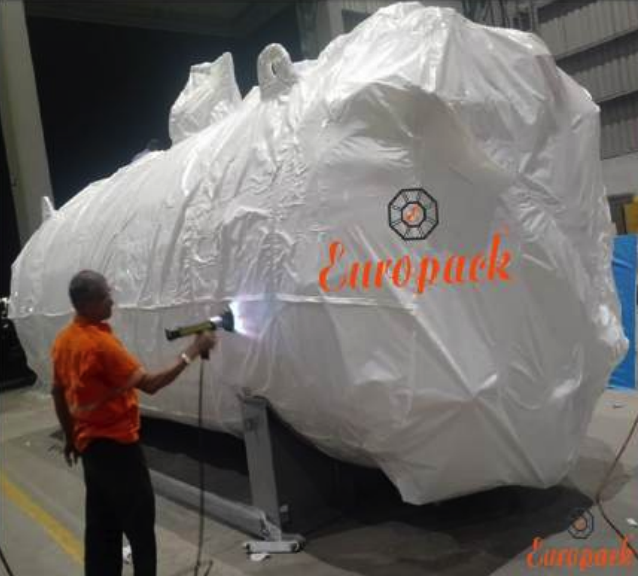
Heat shrink packaging technology offers manufacturers and exporters a highly effective method for protecting machinery, equipment, and industrial products from moisture, dust, UV degradation, and tampering during storage and transportation. Europack operates specialized shrink packing facilities in Mumbai equipped with industrial heat shrinking equipment capable of wrapping products ranging from small electronic components to massive machinery assemblies weighing several tons. Our shrink packing services support manufacturers across automotive, engineering, pharmaceutical, and electronics sectors who require professional-grade protective packaging that provides both environmental protection and visual evidence of package integrity.
The shrink wrapping process employs specialized polyethylene or polyolefin films that contract uniformly when heated, forming a tight, conforming protective skin over products or assemblies. Unlike traditional stretch wrapping that relies on elastic film tension, shrink wrap creates a sealed protective envelope through heat application using propane gas shrink guns for smaller items or large infrared heat tunnels for palletized loads and machinery. This hermetic seal provides superior moisture barrier properties compared to conventional packaging methods—particularly valuable for metal components susceptible to corrosion or electronic equipment requiring low-humidity storage environments.
Machinery manufacturers rely on Europack's shrink packing services to protect equipment during domestic storage before export and throughout international shipping. A typical application involves wrapping a CNC machining center after factory testing, with the shrink film providing dust protection during warehousing, moisture barrier during sea freight, and tamper-evident security ensuring the machine arrives untouched at the customer's facility. The transparency of shrink film allows receiving inspectors to visually verify equipment condition without removing packaging, while also serving as a clear indicator if unauthorized access occurred during transit.
Automotive component suppliers use shrink packing extensively for protecting painted parts, chrome-plated components, and precision-machined surfaces. Parts like bumpers, grilles, and trim pieces that would be easily scratched by contact with conventional packaging materials benefit from the cushioning air gap created between the part surface and shrink film. Electronics manufacturers shipping circuit board assemblies, control panels, and instrumentation require shrink packaging that provides electrostatic discharge (ESD) protection—Europack supplies anti-static shrink films specifically formulated for electronics applications.
Europack's shrink packing infrastructure includes multiple heat application systems matched to different product sizes and production volumes. Our handheld propane shrink guns handle small to medium products including packaged spare parts, tool kits, and accessory assemblies. For larger items such as industrial pumps, gear boxes, and packaged machinery, we employ electric heat blowers that provide controlled, even heating across large surface areas. Palletized loads and very large machinery pass through our infrared heat tunnel systems that apply uniform heat from multiple directions, ensuring complete film shrinkage even on complex geometries.
Film selection critically impacts shrink packing performance. Europack stocks industrial-grade polyethylene shrink films in thicknesses from 100 microns for light-duty applications to 300 microns for heavy machinery protection. Polyolefin shrink film, while more expensive, offers superior clarity, stronger seals, and wider heat shrinking temperature ranges—specified for high-value equipment where maximum presentation quality matters. For outdoor storage or extended shipping durations, we provide UV-stabilized shrink films that resist degradation from sunlight exposure, maintaining protective properties for 6-12 months compared to standard films that deteriorate within weeks under UV exposure.